Blog

Home of the Samurai Coaching Dojo blog where Toku McCree, Matt Thielman, and other guest Sensei share their philosophies and practices for deep coaching and honorable enrollment. SUBSCRIBE for updates to be notified of new blog posts, special opportunities just for subscribers, and more!

Coaching Podcasts: Revisiting 3 of My Best Interviews

Over the years I’ve been interviewed on some great podcasts, but while some of you have heard or listened to these interviews many of you haven’t. This is why I wanted to go back and revisit 3 of them and share my biggest takeaways from recording them. 

  1. THE COACHES JOURNEY PODCAST –

    Episode 15 – Sales With Honour and Love on the End of a Sword

    I’ve told my story of becoming a coach several times on different podcasts, but this one was special. Maybe it was because we were deep in the pandemic in 2020 or perhaps it was the tenderness I felt in the middle of my No Woman Vision Quest.  In either case, there’s something truly special about the podcast that I think will resonate with a lot of coaches.

  2. THE COACHES RISING PODCAST – PART 1

    Episode 8 – Transformative Enrollment: Moving Beyond Yes and No

    This may be my most popular podcast of all time. Other than the book I’m currently working on it lays out my philosophy on creating clients in a powerful and transformative way. I talk about how meaningful a sales conversation can be, and how learning to love conversations around commitment can shift the way you grow your coaching business. 

    If you haven’t listened to it or heard it in a while I HIGHLY recommend you check it out. 
  3. THE COACHES RISING PODCAST – PART 2

    Episode 77 – The Path to Coaching Mastery (and what new coaches get wrong)

    In this episode, I talk about the breakthrough I had around coaching and enrollment. There’s a lot more to coaching than is talked about in the generalization of coaching. Check it out to hear me talk about the final 10% of coaching that often gets ignored.

    This episode also contains some really great tips for new coaches including proposals, packages, and more.

If you get the chance to check out any of these three podcasts, I’d love to hear your thoughts and questions. Feel free to leave a comment below.

What To Do if Your Coaching Client Wants To Quit: 4 Easy Steps

It’s morning. You wake up, pour your coffee, and sit down at your desk. Waiting for you in your inbox is an email from one of your clients telling you that they think your work together has come to an end. 

You feel a sense of shock and surprise. Maybe some part of you knew this was coming. But even though you knew the work had been challenging, the reality of this situation sinks in. 

As your mind starts to reel you feel a desire to shoot back a quick reply. 
You think about offering a discount, more time with you, or something else. 
You wonder if they’ll want a refund for the work you’ve already done. 
You feel groundless, uncertain, and maybe you even doubt if you should be in business at all. 

The truth is that clients quit. 
They do it all the time. 

As a transformational coach, my client’s wanting to quit is often a sign that the work we’re doing is powerful. That the client is on their edge and on the cusp of creating a lasting change in their lives. 

When this kind of change shows up the desire to turn back can be strong. 

Most of the time I’m able to work with a client to keep them engaged and focused on what they want and what’s in the way. 

But sometimes client’s just quit. And when that happens there’s usually nothing I can do about it. They’ve made a choice and they aren’t interested in getting supported to find a way through. 

When that happens I follow four simple steps. 

These four simple steps have helped me navigate the most challenging situations I’ve ever encountered as a coach. And I hope might help you navigate them as well. 

Step 1 – Pause

The #1 mistake I’ve made in responding to someone who wants to quit is responding too quickly. In the moments after getting an email or hearing on a call a client wants to complete early, I’m usually emotional. I could be upset, disappointed, frustrated, sad, or even angry. 

This isn’t the time to respond. Two emotional people talking to each other are much more likely to misunderstand one another, so the first thing I do is pause. I let myself feel what I’m feeling. I reach out to my coach or someone that I know can support me and talk the situation through. I let myself be heard and get some outside perspective. 

This makes sure that when I do respond it’s from the most grounded place possible. 

Step 2 – Take responsibility

Even if the reason the client is unhappy is 99.9% on them there is always a place you can find to be responsible. Maybe you said one thing and the client heard another, you can choose to be responsible for what they heard. Maybe you tried your best to make the client happy but no matter what you did they didn’t like your work, you can be responsible for their dissatisfaction. 

Our natural tendency is to defend ourselves and our work when we feel attacked, but defensiveness only invites more attacks or defense. If a client is being rude or unkind, set a boundary, but if not look for where you can be responsible. Don’t blame yourself (blame never makes anything better) but instead try to regain your sense of power and center. If you can find where you can be responsible you can find the place where you have some choice. 

Sometimes it doesn’t matter what you say to someone else. They are going to find fault and make you the villain regardless. And sometimes there may be legal reasons why you may need to keep quiet. But if you can share where you can be responsible it can have an amazing effect on both you and the other person.

Step 3 – Acknowledge and forgive them and yourself

There’s an incredible process called completion that a coach once taught me. Essentially when you get complete you express all of your hurt feelings, you find where you can be responsible, and finally, you find a way to be grateful for whatever came into your life as a result of the situation. 

No matter what this person thinks of you, their opinion is essentially about them. If you did something wrong either out of fear or by mistake you can learn from that mistake. Even if the person isn’t open to a response or a conversation, you can still acknowledge and forgive them and yourself for what happened. 

I’ve come to believe that people are always acting in alignment with their own well-being in the way they understand that well-being. You’re a human being, even if you screwed up, you are worthy of love and forgiveness. The other person is a human being, even if they’ve been unreasonable they are worthy of love and forgiveness. 

If you can find a way to forgive them and acknowledge them for whatever goodness or generosity they have demonstrated, do it. If you can’t, then pray for the willingness and try to come back to it later. 

No matter what you absolutely need to forgive and acknowledge yourself—not as a way to get you off the hook (your honest reflection is vital when this happens) but as a way to move forward and get back to what you’re committed to creating in life—life goes on after clients quit. In fact, losing clients and jobs have been some of the most powerful life catalysts I’ve ever experienced. It can feel like a tragedy but I assure you that it’s often the opportunity you never knew you needed. 

Step 4 – Live your life

There’s a popular quote that goes, “Live in such a way that if someone spoke badly of you, no one would believe it.” But I actually like the way my friend Adam says it even better. “Live in such a way that even if someone lies about you, you’ll be perfectly fine.”

Your goal in life and in business should never be to make everyone happy. I often tell new coaches that until you get sued or someone threatens to sue you, you’re not really a professional coach. That doesn’t mean you should seek out the experience of having an angry or disappointed client. 

You ought to work hard to deliver on what you’ve promised, live up to your word, and clean up when you make a mistake. But your life isn’t about what other people think about you. 

At some point you have to stand up for your work and what you believe in. You need to be open to feedback and honest reflection, but that doesn’t mean sacrificing your values in order to appease what other people want. This is why the final step is to get back to this commitment and live your life. 

Keep creating amazing designs, focus on improving your writing, and work hard with your next client to create the breakthrough they truly want. Get back to living your life and doing your best work. That’s really what the world wants most from you anyway. 

Where I Find My Coaching Clients and Where You Can Find Yours Too

I’ve talked to literally hundreds of coaches like you who want to build a thriving coaching practice and the number one problem that shows up, again and again, is finding clients.

So if you’ve ever thought to yourself, wow I wish I had more clients but I don’t know where to start, keep reading.

My response is always, “How many people are you connecting with on a regular basis?” 

“How many people are you getting on the phone with? How many people are you reaching out to set up calls with? How many people are you engaging with on social media?” 

The truth is . . . Connection leads to clients. 

There are dozens of ways of connecting:

  • Do a 50-Conversation-Challenge
  • Go to networking events
  • Reach out to people you know that you haven’t spoken to in a while
  • Do informational interviews
  • Host an online support group 
  • Write a blog with content that really helps people
  • etc. etc. 

Most coaches who join the coachingMBA are not creating enough connections. They aren’t reaching out, they aren’t creating value, and they aren’t joining the conversations that their prospects are in. If you don’t have opportunities to connect, you don’t have opportunities to find clients.

This is why in the coachingMBA we don’t leave it up to chance. We come up with and workshop ideas together. And if they don’t work, then we support each other to get into action. 

So where do I find my clients? 

For years I’ve run a coaching practice that regularly produces $250k – $300k in revenue because I—consistently, persistently, deliberately, and repeatedly—find ways to connect with people. 

That’s how I find my clients. 

Some of what I do has taken years to build up, but some of what I do, you could do starting tomorrow. 

So would you like some help figuring out how to find your next client? 

Apply for the coachingMBA

10 Things You Don’t Need To Apologize for as a Coach

A lot of coaches I meet apologize for things way too often. Sometimes these apologies are overt, “I’m sorry I upset you by holding you accountable.” Sometimes these apologies are subtle “I’m not actually saying this out loud but I’m sorry I’m charging more than you might have expected for coaching” Most of these apologies are unnecessary. 

Your job is to help your clients change their lives. To do this you’ll likely need to make them uncomfortable, take risks in what you ask them, and even at times create a situation that will cause them to become upset, defensive, and even accusatory. You can’t do this if you’re apologizing for standing for what they are committed to creating. 


So here’s a list of things you don’t need to apologize for as a coach. 

  1. How much you charge – If people are upset that you charge that much, they don’t have to pay it. If they’re upset about it, it’s because of their own context around money, value, and worth which has nothing to do with you.

    Creating your fees is about your own stand on commitment and your willingness to be in a powerful conversation with clients about what is required to work with you. There is no right fee, so you don’t need to apologize for yours. 

  2. That you charge at all – Some people expect free emotional labor. Not just from you but from the world. You don’t need to apologize to them. Being clear about when you’re coaching out of generosity and when it’s time to create a commitment (including fees) will have them be invested in the work.

    Money isn’t the only way to invest, but in the current world we live in it’s a powerful stand-in for energetic commitment. Asking for people to be committed is part of being a coach so don’t apologize for it. 

  3. Having Boundaries – Your clients will inevitably have some expectations of you, some of these will easily align (you should be clothed during our sessions), some of them may not (you should answer my texts at 2 am). Because these expectations will vary most coaches create agreements and boundaries around how the relationship will work. You don’t need to apologize for these boundaries.

    You are leading your client into having a powerful relationship with life. You model that by having a powerful relationship with them. If they don’t like your boundaries they can hire someone else or they can negotiate with you. But you don’t need to apologize for them . . . ever. 

  4. Asking Clients to Abide by Agreements – You likely have agreements with your clients. If you don’t, it’s a good idea to create them. Sometimes clients don’t empower agreements which is pretty normal. When this happens it’s easy to get some push-back when you remind them or ask them to step into the container you created.

    Reactions and defensiveness are to be expected, but you don’t need to apologize for asking them to abide by these agreements. You can be empathetic and curious, but you don’t need to apologize for holding the container. 

  5. Making Small Human Mistakes – Sometimes you’re going to say the wrong thing, ask a question in an odd way, and forget someone’s name (not the client’s😬). You don’t need to apologize for these things most of the time. You are allowed to be human. Your client is allowed to be human.

    If they need to be acknowledged, do so, “Right her name is Susan, thanks for reminding me.” but mostly just move on. If your client demands you apologize for things like this, consider getting a new client, or invite them to take a look at what’s going on. 

  6. Saying No to Potential Clients – Whether the client isn’t a good fit for what you do, they creep you out, they’ve done something inappropriate, or you just don’t like them, it’s ok to say you don’t want to coach them anymore. You don’t have to apologize for this. You don’t even need to act apologetic, just be honest and refer them to a coach that can help them.

    You get to choose your clients just like they get to choose their coach. If they get super upset it’s probably even more reason why you should refer them out. 

  7. Ending Client Engagements – Most people need to switch coaches at some point. And sometimes you need to switch clients.  It may be because something has soured in the relationship that you or they are unwilling to take on or it may be that the relationship has come to a natural end. You don’t need to apologize for ending the relationship.

    If the engagement is ending early you should talk to your coach and some peers about it, but if you’ve gotten supported and you’re clear, don’t feel bad about ending it. If you do think the relationship can survive with some changes then bringing them to the client is a good idea. But no matter what, you have the right to end a coaching relationship. You don’t need to be apologetic about it if you are clear it’s what’s best for you, the client, or both of you. 

  8. Raising Your Rates – Prices change all the time. You are under no obligation to keep your prices the same unless you have an agreement that states you will, and even then you’re allowed to renegotiate. Sometimes people don’t like this, that’s fine, they have a right to get upset. And you have a right to raise your rates. Don’t apologize for charging more for what you do. 

  9. Clients Getting Upset – It’s likely that you’ll have an upset client at some point. If you really did something wrong, broke an agreement, and/or spoke from privilege unconsciously feel free to apologize. But most times when your clients get upset you will have done nothing wrong.

    Transformation can be upsetting. Most of us are comfortable with how things are even if it’s not really working for us. This is why when a coach works with us to change things we often get upset because the change is confronting. So if a client gets it, don’t apologize and assume you did something wrong. Get curious, listen, and really understand the nature of their upset. If there’s something to clean up, do it, but don’t apologize for coaching people

  10. Clients Wanting To Quit – Just like in #9 if you have your clients on their edge, many of them will want to quit. Quitting looks different for each person. Some people demand a refund, others just slowly disengage, and some stop feeling their feelings as they trudge through the work.

    It’s your job to notice how and in what way they might quit, to warn them that it might happen, and to support them to get back into commitment when it shows up. But you don’t need to apologize when it happens. Clients wanting to quit is a sign of good coaching. 


Ok, but when should I apologize? 

  • When you’ve broken an agreement. 
  • When you’ve spoken from privilege or expressed a racist/bigotted view. (intention doesn’t matter) 
  • When you have gone too far and hurt someone’s feelings. 
  • When your lack of consciousness has caused pain. 
  • When you’re truly sorry. (vs anxiously obligated to please through apology) 
  • When you’ve done something unethical or unkind. (again intentions aside) 

Most coaches I know apologize or embody apology too often, except for the ones with overly healthy—aka unhealthy—egos (those coaches don’t apologize nearly enough). If you’ve read this far you’re likely one of the former coaches. For you, I would encourage and advise you to be less apologetic, more responsible, and more compassionate and bold in your coaching and your life. 

Powerful coaching is not for the faint of heart, it’s for warriors of the truth and people who are committed to living in a way that’s more than ordinary. If you can be that for other people as well as yourself you can learn to really impact those around you. So get to work. 


What Does It Actually Take To Become a Six-Figure Coach?

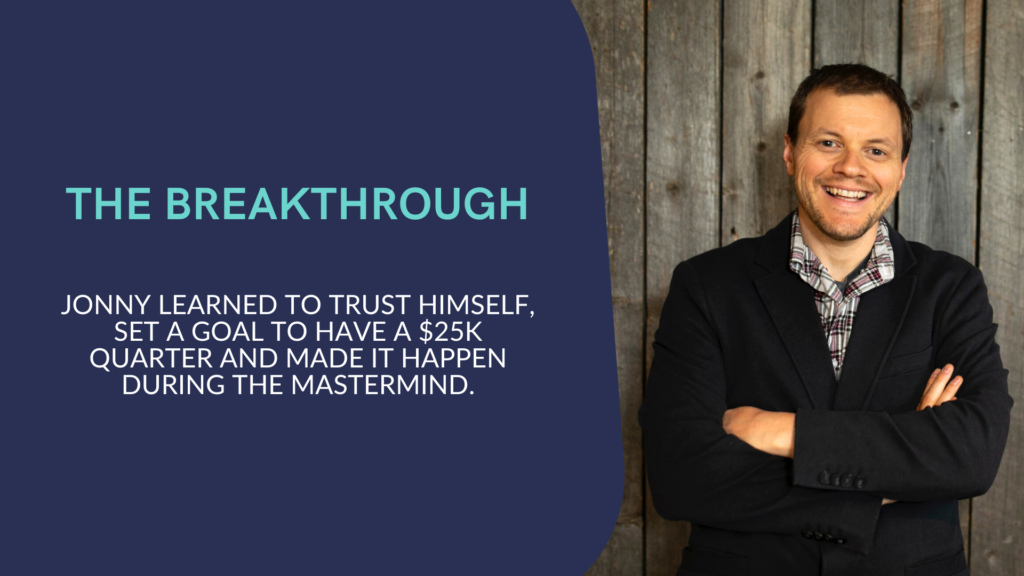
“I created a 4th quarter goal of $25,000 and actually hit that goal, which felt pretty amazing!”

This coach made six figures using the teachings and framework from the coachingMBA

Why do some coaches create incredible results while others struggle? 

The answer is simple: the coaches that do the work, actually take the ideas, test them out, and keep going even when they face challenges. Those are the coaches that get the biggest results. 

This is why when I built the coachingMBA I designed it to make commitment and action a requirement instead of just a hopeful wish. And that’s the reason coaches who graduate the coachingMBA don’t just experience growth inside the mastermind (every graduate has raised their rates and signed more clients in the mastermind), they go on to keep growing their coaching practices, improving their coaching skills, and pushing the edges of what it means to be a masterful coach. 

So today I’m going to share a case study of how one of our graduates did just that and the lessons you can take from his experience. 

Inside the mastermind, Jonny created a $25k quarter which is pretty impressive in itself, but what’s even more impressive is that he took the lessons he learned and went on to have his first 6 figure year. 

In this case study I share the 3 big lessons that Jonny learned:

  1. Real change requires a change in being.
  2. Confidence never comes first.
  3. The best coaches demand the best from their clients.

I’m also going to share how mastering these lessons changed Jonny’s practice and relationship to coaching in a profound way. 

As a result of mastering these lessons, Jonny:

  1. Rediscovered who he was.
  2. Overcame his imposter syndrome.
  3. Started coaching more powerfully.

This isn’t like any of my other case studies where I just talk about the success a client has created. Instead, in this case study, I really dig into the lessons he learned so that you can take some of Jonny’s magic with you. 

Read the case study

The Three Stages of Creating a Successful Coaching Practice: Transformation, Desire, and Commitment

Almost every coach I know has had some deep experience of transformation. 

For some of you, it was a moment of enlightenment, a crisis, a coach, or a teacher that made a big impact on you. But for every single person I know who is a coach (if they’re any good), they have this deep and profound experience of what it is like to have your life transformed by being in relationship with another person. 

A person who chooses to see you, to hold you, and to work with you in a way that no one else has before. A person who believes in your possibility, who pushes you, who challenges you. Every coach I know has had that experience and often many of those experiences. 

For some of us, there emerges a desire, a calling. 
A desire to be in the kind of relationships that change people’s lives. 

In meaningful and profound ways. To not just be in a kind of relationship where we watch football or drink some wine or hang out and complain about politics or movies or entertainment. But to be in the kind of relationships and conversations that have a lasting impact. That leave an indelible mark on each other’s souls or ways of being. 

And then for a smaller group of those people, there rises a commitment. 

A commitment to finding the structure, statement, willingness, and courage to plant a flag in the earth and say “I am this kind of person for you. I am this kind of person for the world. Come have a conversation with me. Come make commitments with me. Come step inside my container and I will create that kind of relationship with you.” 

These are the three steps: impact/transformation, desire, and commitment.

Most coaches I know have the first two handled. 

They have lots of powerful experiences of transformation and they have a deep desire to create something in the world. They lack the third which is commitment. It’s where I see coaches stop again and again because they think that the experience and desire are enough. 

Experience and desire to help people and transform is incredible, but unless you are willing to commit to master the structures, skills, and ways of being in the world so you can consistently—as a way to make a living—offer this kind of incredible relationship and incredible conversations, you are going to continue to struggle. 

It is not a roadblock. It is not an unfortunate reality that you have to figure out. This isn’t “I wish I could just coach but unfortunately, I have to figure out this… I have to figure out marketing”. No. 

It’s the thing that sets apart those that talk about wanting to serve and those that serve. It is the thing that stands between wanting to make a difference and actually making a difference. 

And sure there are problems with business, marketing, and sales, but if you can master the commitment, structure, ways of being that have a lasting impact on the world which allows you to earn a living changing people’s lives, that is not insignificant. 

That is not a footnote. That is not a thing to be moved aside. It’s not traffic to get around. It’s a vital process. A process that not only helps you become a better coach but helps you be the kind of person that actually makes a change in the world. 


That is why I created the coachingMBA

I created the coachingMBA not because I want to teach you a bunch of business skills, though we talk about business skills. 
Not because I want to teach you about marketing and sales, though we talk about marketing and sales. 

I created it because I saw that being able to master this thing called creating a coaching practice, being able to master the thing called creating a coaching business, getting clients, managing your money, and learning how to get stuff done and produce work that makes a difference in the world, is what separates the journeyman coaches from the mastermind coaches. The wannabe’s from the people who are making a huge impact in the world. 

If you’re the kind of coach who has had an incredible experience of transformation and has an incredible desire to change the world but can’t seem to nail the commitment, who looks out there and sees all the marketing crap and all the five-step processes to get clients that’s not quite it, I hope you take some time to check out some of the stuff on this site and some of the stuff that I’ve written.

Your calling, the thing that happened after your transformation, the thing that caused your desire to rise, is a sacred desire. And it is worthy of a sacred and meaningful commitment to mastering this thing that is so important to getting your work out to the world. Not as a footnote, not as an obstacle, a hurdle to cross, or some box to be checked. But as integral and aligned with the greatest things you have to offer the world. And the changes that you want to create. 

I hope that we’ll get a chance to talk and connect. And if not, thank you so much for being a coach.

How To Build a Coaching Practice From the Back of an RV

How to build a coaching practice while on a road trip

I hear coaches talk a lot about how the things in their lives keep them from having the kind of business they want and how if they could just get things more organized they would be able to finally make progress on building their practice. 

But from the very first time I met Kelby, I realized he wanted to challenge all of that. In our interview, he asked if he could do the calls on the road. When I asked him to tell me more, he explained how he was planning to drive around the US in the back of an RV while he built his coaching practice. 

I’m sure many teachers or coaches might have said NO WAY, but I loved Kelby’s sense of adventure. I asked him if he was committed to making sure he would be available for all of the calls and when he said yes, I said LET’S DO IT!!!

Too many coaches treat building a coaching practice like an arduous chore, but most of us didn’t become coaches to live a life of grueling work. We became coaches to live a life of adventure. The adventure of changing people’s lives, the adventure of being able to work from remote locations, and the adventure of doing work that lights us up. 

During the coachingMBA, Kelby grew his practice all while living and working remotely. Even though he faced challenges and took more time off than most coaches might, because Kelby focused on the right things he was able to make incredible progress. 

Here’s how we made it happen:

1) Kelby got clear on what his ‘essence’ was – One of the things we do inside the coachingMBA is help coaches discover who they are fundamentally. When Kelby joined the ​​coachingMBA he was already an accomplished, intelligent, young professional. But he often struggled to set himself apart from other coaches. There are a lot of smart coaches out there, but there aren’t a lot of Kelby’s. 

Through the Essence Process* Kelby discovered he wasn’t just smart; he actually had the essence of Brilliance. This meant that Kelby had a way of being with ideas and people that made him and them shine. He didn’t need to show people how smart he was on every call, he just needed to sit with them and their future would seem brighter. 

By learning to come from this place, Kelby started to relax more as a coach on his enrollment calls which helped people feel how grounded and trustworthy he really was.

It also helped Kelby realize that his love for adventure wasn’t something he did on the side of being a coach, but was actually core to what made him unique. 

2) Kelby realized he wasn’t alone – Kelby is the kind of guy that loves finding role models and icons to model himself after. The downside was that he often felt like he was lost and uncertain in comparison. 

One of the big problems in the coaching industry is that all the ‘gurus’ act like they’ve got it all figured out. You’ve simply got to join their $20k golden circle and you can learn it all too. But the truth is much more complicated than that. 

I’ve worked with some of the world’s top coaches and many of them struggle with the same questions new coaches struggle with. YES the scale and nature of those challenges are different but the fundamental questions are the same. 

By joining a group of other coaches at a similar stage Kelby started to realize how normal his questions and struggles were. He was able to look beyond the marketing glitz and begin to understand the simple challenges that all coaches face when they build a practice. This not only gave Kelby more confidence, but it also helped him figure out where to focus his efforts. 


3) Kelby got clear on what he wanted to create –
Once Kelby realized that he didn’t need to work so hard and that he was MUCH further along than he thought, he was able to put more energy into the kind of work he craved. 

He got clear on the kind of leaders that inspired him and started finding creative ways to get his coaching out into the world. Kelby started to see his love of travel as a way to try out new and creative ways to give people an experience of his work. 

He put a table up and offered drop-in coaching at a conference, he started hosting peer meetup groups, and he even began hosting a regular practice session for other coaches. 

Kelby’s experience shows that you don’t have to wait to build a practice in order to start living the life you want. In fact, stepping into the life you want can be a powerful catalyst for creating the kind of practice you’re longing for. That’s why I created a Case Study where Kelby shares some of the biggest impacts of the ​​coachingMBA and how he’s used what he’s learned to help him continue to grow his practice.  

Read the case study

How To Bring Your Coaching Practice Back From the Dead

“I got more clients in the 6 months of the coachingMBA than I had, had in the previous 2-3 years.”

coachingMBA case study on Kevin Benson


Before joining the ​​coachingMBA, Kevin was like a lot of coaches I’ve known. He LOVED coaching, he had done hundreds if not thousands of hours of training. He had worked on his business in fits and bursts but never really found a groove. Sometimes his practice would be almost thriving with a handful of clients he loved. And sometimes it would be incredibly slow with only 1-2 clients at a time. 

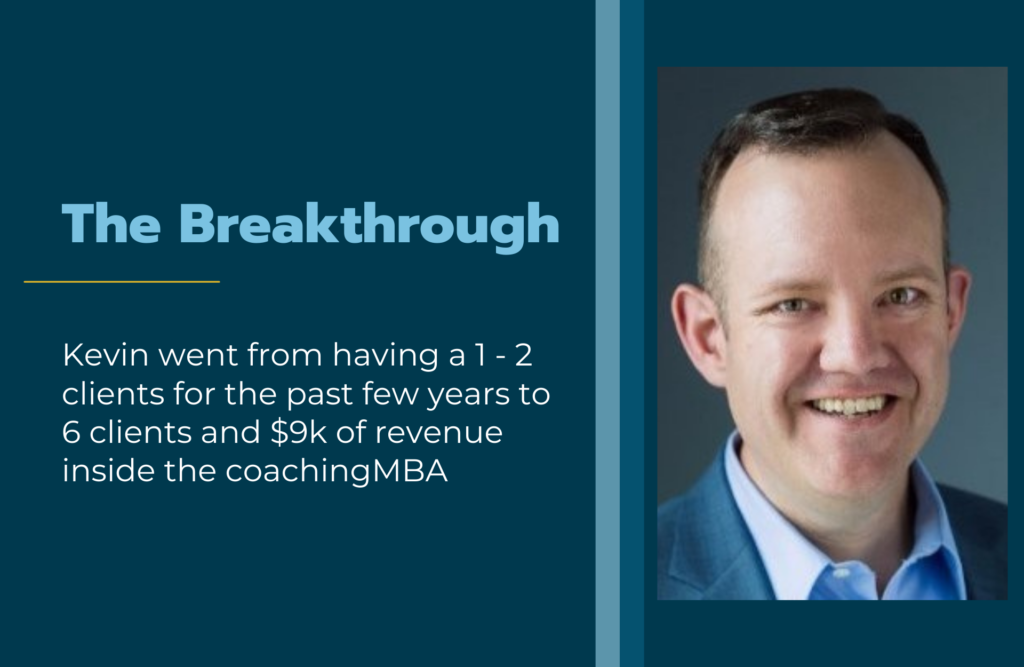
By the end of the coachingMBA, Kevin went from 1 client to 6 clients, created over $9,000 in new revenue, and reinvigorated his business all of which would have been impressive in and of itself. What’s even more amazing is that he did all this while working his day job. And his day job isn’t easy. You see Kevin helps resettle refugees from around the world into new homes in the US. This means he created this success all while working with refugees from Afghanistan and other places around the world find new homes. 


Here’s how we made it happen:

1) Kevin realized he didn’t have to do it alone – Like a lot of people that join the coachingMBA, Kevin realized that when he had been missing was a community of peers to touch, move, and inspire him as a coach. I see this happen a lot with coaches who have been ‘scraping by’ for a while. 

Whatever community or support they had when they got started falls away and they end up feeling alone. Their struggle often makes them hesitant to reach out for support, when ironically that’s when they need support the most. 

2) Kevin rediscovered joy and fun of coaching  – Even though Kevin LOVED coaching he had started to resent his coaching business. After all this thing he loved came with all this stuff he didn’t love. Sales calls felt awkward, he couldn’t figure out why he couldn’t grow his practice, and there was this constant feeling of doubt and failure that shadowed everything he did. 

Inside the coachingMBA Kevin started having FUN! He realized the sales conversation could really just be another coaching conversation. He got bold in looking for new clients. He even made this HILARIOUS video where he embodied a ‘typical coachy coach’ that got everyone in the group laughing. 

3) Kevin Started Taking Risks – Even though Kevin had invested a lot of time in himself, he had never made the kind of BIG investment in his own growth and development. And Kevin was “scared to spend money with no ‘guarantee’ of results!” But Kevin decided to take that risk anyway, and he didn’t just stop there. Throughout the mastermind he kept taking risks. He launched a 50 conversation challenge, even though he’d been a coach for a few years. He created space for himself at work by having a conversation with his boss. And he took more risks in his coaching. 


The impact of all these risks is that Kevin went from dabbling or trying in his coaching business to ACTUALLY making his business happen. That kind of commitment and courage is what it takes to build a successful practice, and that’s the kind of courage our clients need from us the most. 

Because Kevin’s story is so common for many coaches I know, I created a Case Study where he shares exactly what he learned and how it changed his business and practice. 


Read the case study

From Sales Shame to a £38K Client

When Ross Boyd joined the coachingMBA he told me a story about being at a party when someone asked him what he did for a living. When he told them he was a coach he immediately burst out laughing. Even though he loved coaching he struggled to feel like a real professional coach. And it impacted everything from how he ran his session to how he showed up on sales calls.

He told me that he’d often feel embarrassed or ashamed to talk about what he did. Which was remarkable because Ross was a former soldier and a man who takes great pride in who he is in the world.

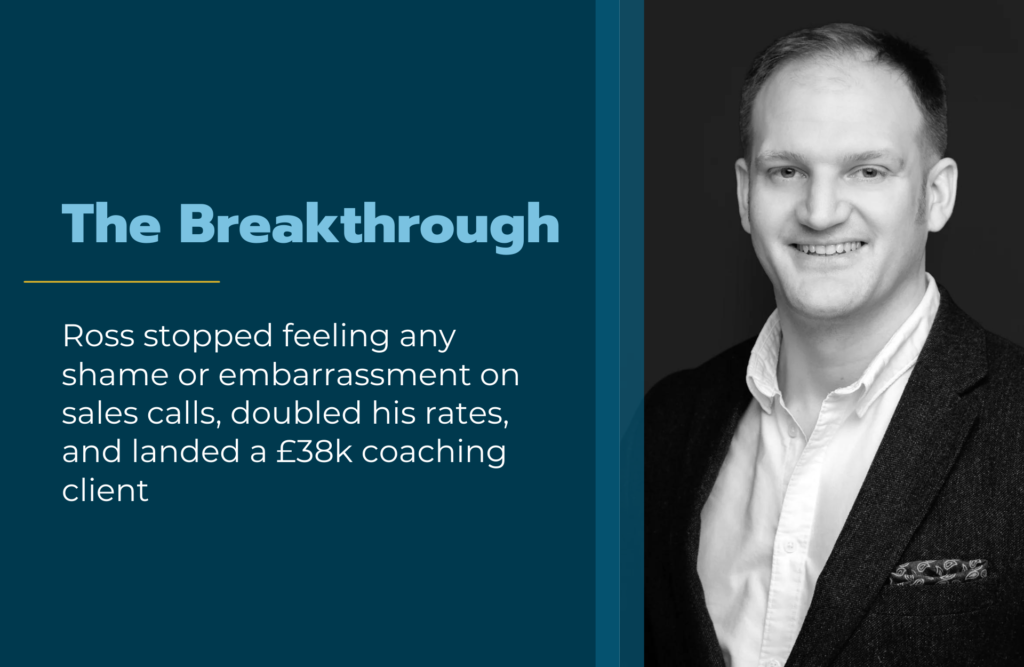
Fast forward six months later and Ross has increased his rate (twice), signed several £5k+ clients, landed a £38k coaching deal, and has a new sense of “inner peace and pervasive confidence” about being a coach.

Here’s how he did it:

Step 1: In our first month together, we worked on discovering what made Ross and the other members of the coachingMBA unique. Ross reported that getting the honest reflection of his clients, family, and colleagues shifted his understanding of who he was. He started to see that how he saw himself didn’t match up with the way he showed up in the world.

Step 2: Once Ross understood that the world naturally respected who he was as a leader he began to take more risks and lean into his natural strengths. This helped him raise his rates (by 250%) and have the courage to “bottom-line” important deals (including the £38k client). What he started to understand was that when he was committed and showed up with that commitment, the world responded.

Step 3: The first two steps gave Ross the confidence he needed to start letting go of deals he didn’t want—but kept chasing out of fear—and start focusing on the kind of work he did want. As a result Ross signed two clients at his higher rate of £5k and he started to trust that he could both do work he loved and build a business without compromising his passion.

I recently created a Case Study where I sat down with Ross and talked about what he learned.


Read the case study

The coachingMBA

If you want to grow you have to evolve.

And for the past year I’ve been working to evolve my purpose in the realm of creating more incredible coaches.

But as much as I love working 1-1 with leaders there’s only one me. And the world needs an ARMY of incredible coaches to help it grow and evolve. So for the past 5 years I’ve been working to create more of those coaches.

For a long time that meant the Coaching Dojo, where we used an incredible and unique approach to create mastery through practice and challenge. But over the last year or two my purpose has shifted. As much as I LOVE helping coaches gain mastery I saw too many of them struggle when it came to building a business.

So for the last year I’ve been testing a new offering.

The CoachingMBA

This wasn’t just a simple test. I ran two FULL groups through a rigorous 6 month process to help them turn pro as coaches and create the kind of solid business foundation I WISH someone had helped me create in my first few years as a coach.

And the results have been incredible

  • 3 members of the Coaching MBA created $20k+ in new business during the mastermind.
  • 2 members went on to have $100k years after graduation
  • Several members quit full time jobs to pursue coaching full time
  • One member even had a baby, took time off, and returned to a handful of clients waiting to work with her

Best of all . . . almost every graduate of the mastermind said it was the connections they made and what they learned about themselves that were the most valuable things they got from the program.

All of this is to say the results of the CoachingMBA shows that this new way of helping coaches develop and grow not just as coaches but as smart and savvy business owners WORKS!!!

Which has given me the confirmation I needed to go ALL IN on this new direction.

And that’s why I’m excited to announce today the launch of my new website CoachingMBA.co

This new site is simpler to navigate, more focused on my current mission for coaches, and designed to help people find the most valuable things I’ve written, recorded, and created for coaches who want to become masterful at coaching clients and creating the kind of business a master coach deserves.

I hope that you’ll take some time to go check out the new site and let me know what you think.

Over the coming days and weeks, I’ll be adding more content and honing this site even more.

Eventually the old Coaching Dojo website will be put on hiatus and this will become the only place to work with me in developing your coaching mastery and become the kind of coach the world needs.

While my main offering is going to be on business mastery, I’ll still continue to write about how to become a better coach and leader, so even if business isn’t your focus right now I hope you stick around and stay engaged in the conversation.

Thank you so much for your support over the years and I’m excited to share in this new direction.

And finally thank you for being a coach. Being a coach is such an incredible honor. Here’s to making sure we keep treating it like the honor it truly is.